Building · The FAA
You build the major portion.
That is the whole category.
Experimental Amateur-Built is not a loophole. It is a defined category with a clear requirement, and it is the path the SD-1 takes in the United States.
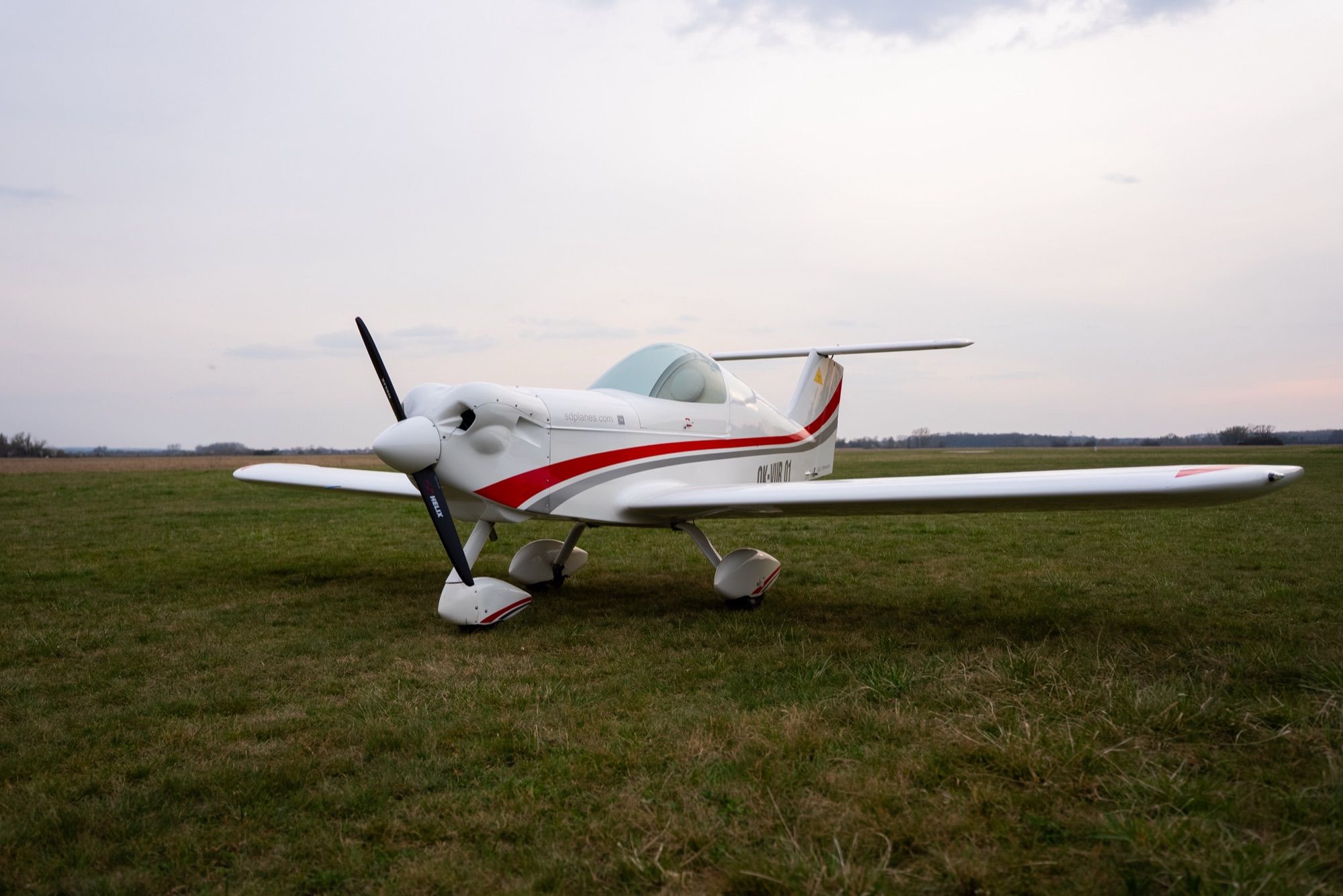
The major portion, by you, for education or recreation.
An amateur-built aircraft is one whose major portion is fabricated and assembled by persons undertaking the project solely for their own education or recreation. That is the requirement in 14 CFR §21.191(g), and everything else follows from it.
It means you are the builder, not a customer taking delivery of a finished airplane. It also means the airplane is inspected and certificated as experimental, with the operating limitations that go with it.
None of this is exotic. Thousands of amateur-built aircraft are certificated in the United States, and the process is well documented by the FAA.
What the FAA actually evaluated.
On March 15, 2017, the FAA's National Kit Evaluation Team completed an evaluation of the Minisport SD-1 TGC. The letter recording it is dated March 20, 2017. The kit evaluated was defined by a Spacek parts list titled "List of SD-1 TGC 51% Airframe Kit Parts", dated January 2, 2016.
The FAA determined that the evaluated kit may allow an amateur builder to meet the major-portion requirement of §21.191(g). The Minisport SD-1 TGC appears on the FAA's Amateur-Built Aircraft Kit List with that 2016 parts list (checked 22 September 2026).
What it is not
The FAA states in the letter that the evaluation does not mean the aircraft, Spacek or the U.S. distributor is FAA certified, certificated or approved. An evaluation is not an approval, and the language matters.
What it covers
The SD-1 TGC as defined by that 2016 parts list. It does not extend to the conventional tailwheel or castoring-nose-wheel configurations, to the current Quick Build package, or to a changed current package — unless and until that is confirmed.
Who inspects it afterwards?
A builder who qualifies as the primary builder of an amateur-built aircraft may be eligible for an FAA Repairman Certificate (Experimental Aircraft Builder) for that specific aircraft. The holder may perform its annual condition inspection.
Eligibility is determined by the FAA. It follows from having built the major portion, not from owning the airplane — buying a completed amateur-built aircraft does not carry the certificate with it.
Can a Sport Pilot fly one?
Possibly — and we are not going to turn that into a promise. Under the post-MOSAIC rules, a Sport Pilot may operate aircraft beyond the old light-sport definition, subject to the design and performance limits of §61.316.
Whether a particular SD-1 qualifies depends on that specific aircraft meeting those limits, and on the pilot meeting all applicable requirements. Ask us and we will walk through it with you rather than give you a slogan.
One thing we will not do is call the SD-1 "an LSA". In the United States it is an amateur-built airplane.
Straight from the FAA.
We would rather send you to the original than ask you to take our word for it. These are FAA pages and documents, linked as we found them.
Links checked 22 September 2026
- Amateur-Built AircraftFAA overview of the amateur-built category.faa.gov
- Amateur-Built Aircraft — airworthiness certificationfaa.gov
- Repairman Certificate for Amateur-Built Aircraftfaa.gov
- Amateur-Built kit list (National Kit Evaluation Team)The FAA list that includes the Minisport SD-1 TGC entry.faa.gov
- SD-1 TGC evaluation letter (PDF)The FAA letter recording the March 2017 evaluation.faa.gov
- SD-1 TGC fabrication and assembly checklist (PDF)faa.gov
- Sport Pilotfaa.gov
- MOSAICfaa.gov
Built by you. Supported here.
We are not the FAA and nothing on this page is legal advice or a substitute for your local FSDO or DAR. What we can be is the people in the United States who know this airplane, answer the phone, and have the parts.