Engines · SE33I XP
35 hp. Four-stroke.
Air-cooled.
Spacek builds the engine as well as the airplane. The SE33I XP is the current engine offered with the SD-1, and SD Planes USA sells and supports it in the United States.
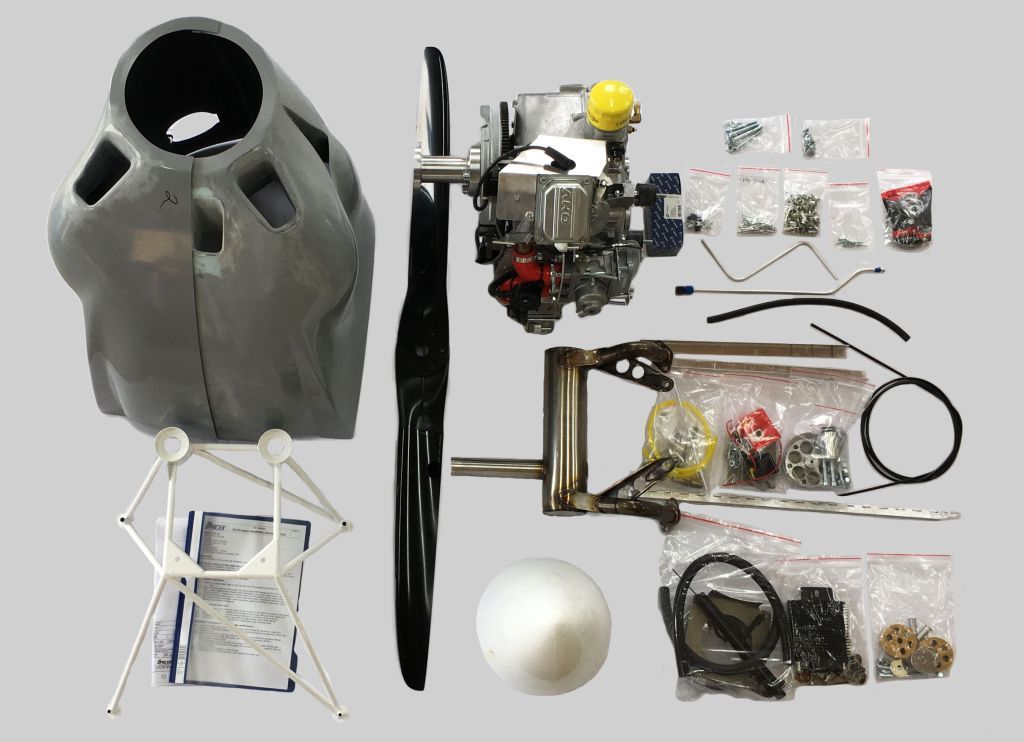
What the manufacturer states.
- Output
- 35hp
- Manufacturer-rated output.
- Manufacturer-listed engine weight
- 71lb
- (32 kg)
- Manufacturer-listed. Not an installed or firewall-forward weight.
- Manufacturer-published TBO
- 1,000h
- Manufacturer-published. Not a guarantee of service life.
- Engine type
- Four-stroke, inverted V-twin, OHV
- Displacement
- 49.42 cu in (810 cc)
- Bore
- 3.300 in (83.81 mm)
- Stroke
- 2.890 in (73.41 mm)
- Compression ratio
- 9.3:1
- Oil capacity
- 61–64 oz (1.8–1.9 L)
- Manufacturer-published cruise fuel consumption
- 1.3 US gal/hr (4.8 L/hr)
- Maximum fuel consumption
- 2.1 US gal/hr (8.0 L/hr) at 3,600 rpm
- Fuel
- Unleaded MOGAS, minimum 87 AKI (91 RON)
Manufacturer requirement. Up to 10% ethanol or 15% MTBE accepted; E85 prohibited. Above 5,000 ft the manual accepts a minimum 85 AKI (89 RON) with the manufacturer’s stated high-altitude adjustment.
Engine figure, not aircraft fuel burn.
Can I use 100LL?
Spacek has not tested the SE33I XP with 100LL. Current factory guidance specifies unleaded automotive gasoline meeting the requirements in the Operator's Manual.
The engine weight above is the manufacturer's figure for the engine itself. It is not an installed weight: a firewall-forward figure includes the mount, exhaust, cooling, oil system, propeller and everything else that goes with the installation, and we do not have a confirmed number for that yet.
Source · Factory specification · SE-33I XP Operator’s Manual, 14 January 2024 · Direct factory confirmation, 23 September 2026 · SD Planes USA approved conversion
Simple on purpose.
Air cooling, magneto ignition and a dry crankcase with an external oil tank and cooler. Forged crankshaft and rods. The factory describes it as based on an industrial engine solution, mounted with high-amplitude mounts and pads to reduce vibration.
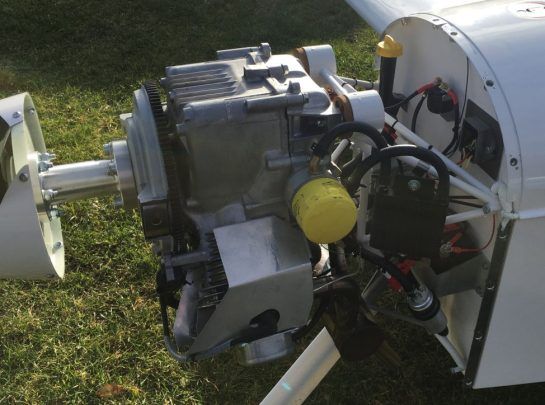
- Configuration
- Inverted V-twin, OHV, four-stroke
- Cooling
- Ram air
- Lubrication
- Dry oil sump, with an external oil tank and oil cooler
- Propeller drive
- Propeller flange mounted directly on the flywheel
- Rotation
- Clockwise, viewed from the front
- Crankshaft
- Forged, one central crank
- Connecting rods
- Forged
- Ignition
- Single magneto ignition for each cylinder
- Fuel delivery
- Vacuum fuel pump, with a backup electric fuel pump
- Oil pump
- Mechanical, internal
- Electrical
- Electric starter, generator stator, regulator and starter solenoid
- Instrumentation
- Oil pressure switch and oil temperature sensor; CHT rings optional
- Mounting
- High-amplitude mounts and pads for vibration reduction
Propeller
- Designation
- Helix H30 F
- Diameter
- 49.2 in (1.25 m)
- Blades
- Two
- Pitch
- Fixed
- Material
- Composite
Operating limits
- Recommended idle
- 1,000–1,200 rpm
- Recommended cruise
- 3,000–3,300 rpm
- Maximum continuous rpm
- 3,600 rpm
- Cylinder head temperature
- 140 °F minimum, 464 °F maximum (60–240 °C)
- Oil temperature
- 77 °F minimum, 266 °F maximum (25–130 °C)
- Oil pressure
- 4.4–36.3 psi (0.3–2.5 bar)
- Outside air temperature
- 14 °F to 104 °F (−10 °C to +40 °C)
At 3,600 rpm the manual states a minimum of 20 volts AC for the 10 A and 13 A charging options, and a minimum of 30 volts AC for the 16 A option.
Source · SE-33I XP Operator's Manual, issue date 14 January 2024, supplied by the factory. Power figures from that manual are not reproduced here — we have asked the factory to clarify them first.
One engine, one airframe, one target weight.
A 35 hp airplane only works if the airplane is genuinely light. That is the whole argument of the SD-1, and it is why the airframe is built the way it is.
One thing to know when you read performance numbers, here or anywhere else: the flight manual we hold documents the earlier SE-33 engine in a specific airframe configuration. Where a figure comes from that manual, we label it. We do not reprint it as an SE33I XP figure.
What it asks of you.
The factory schedule, summarised. The operator's manual is the authority and ships with the engine; we do not republish it.
- First 5 hours
- Change oil; check for leaks
- Every 8 hours or daily
- Check oil level; check for leaks, cracks and damage; check throttle and choke cables; check the exhaust system; check the air-intake mesh
- Every 25 hours or annually
- Clean the air-intake mesh; check fuel lines for wear; check the exhaust system
- Every 100 hours or annually
- Change engine oil; replace the oil filter, spark plugs, air filter and fuel filter; clean the air-cooling system; check valve clearance if performance problems are noted
Details we are confirming with the factory.
This list is deliberate. These are the questions buyers and builders ask, and we would rather show you the gaps than fill them with numbers we cannot stand behind.
- Installed (firewall-forward) weight
- Torque
- Propeller blade pitch angle
- U.S. parts and overhaul arrangements