SD-1 Minisport · Construction
Wood. Carbon. Foam.
All there for a reason.
The SD-1 is not simply a wooden airplane. It combines traditional aircraft woodwork with composite and foam structures, each used for a particular structural job.
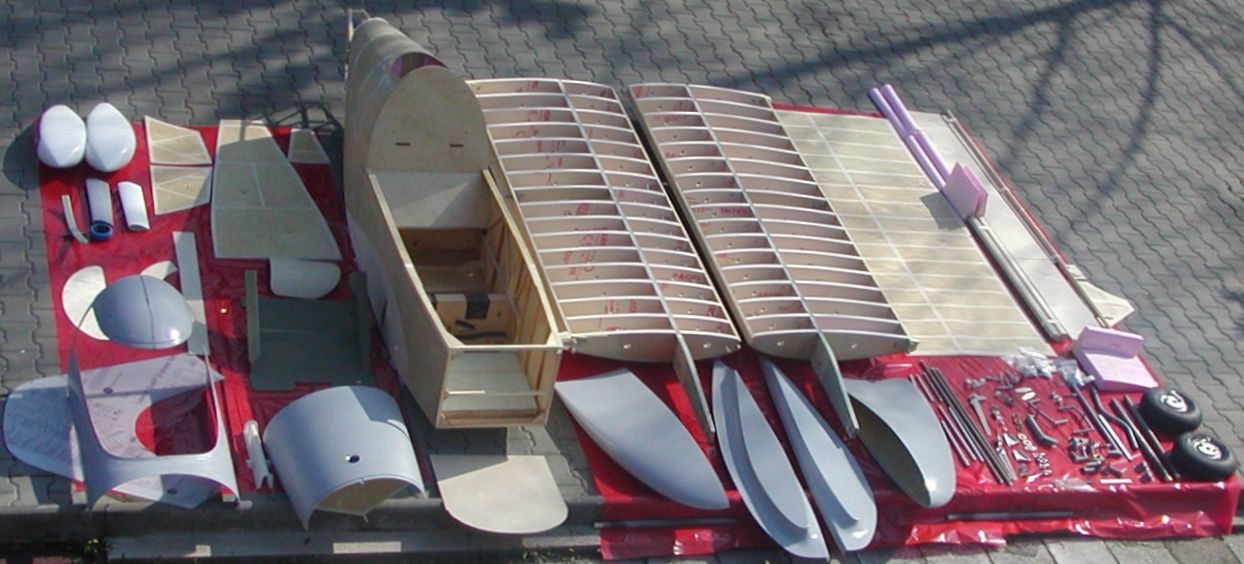
The fuselage is a wood truss.
A wood-truss structure covered in plywood, with composite used for the shapes that suit it.
- Structure
- Wood truss
- Prevalent structural section
- 0.59 × 0.59 in (15 × 15 mm)
- Covering
- Plywood, 0.031–0.118 in (0.8–3 mm)
- Cabin hood
- Composite
- Windshield
- Polycarbonate, 0.059 in (1.5 mm)
- Canopy
- Side-opening
- Ventilation
- NACA inlet
- Seat back
- Inclined approximately 40°, removable
- Baggage
- Compartment behind the removable seat back
- Fuel tank
- Integral 9.2 US gal (35 L) tank behind the firewall, fiberglass / PVC-foam sandwich
Source · SD-1 TG + SE-33 Flight Manual, Issue 1. Current factory drawings take precedence.
The wing carries the idea.
The wing is where the mixed-material approach is clearest: composite where the loads are, foam and plywood to give it shape and skin.
The main wing, horizontal tail and fin spars are delivered ready to use in the Basic Kit. The factory makes them from certified materials using vacuum bagging and high-temperature curing.
- Main spar
- Composite
- Spar caps
- Carbon
- Ribs
- XPS foam
- Skin
- Plywood, 0.039 in (1 mm)
- Wingtips
- Glass-composite sandwich
Source · SD-1 TG + SE-33 Flight Manual, Issue 1. Current factory drawings take precedence.
Each material has a job.
Mixed-material construction means choosing a material for a role rather than building the whole airframe from one thing.
- Wood
- The fuselage truss and much of the primary structure.
- Plywood
- Skins and webs: 0.031–0.118 in (0.8–3 mm) on the fuselage, 0.039 in (1 mm) on the wing.
- Carbon
- Spar caps and reinforcement, where loads concentrate.
- Composite
- The main wing spar, tail spar, cabin hood and wingtips.
- XPS foam
- Wing ribs, shaping the aerofoil between spar and skin.
What the manual specifies
- Wood
- Spruce; Finnish birch plywood is the manufacturer’s preference, and beech plywood is usable but heavier
- XPS foam
- Wing ribs, flaperons, elevator, fin, rudder and fuselage bulkheads
- PUR foam
- Hard polyurethane in the upper part of the tank and fuselage
- PVC foam
- Seat sandwich
- Steel
- AISI 4130 (25CrMo4) for all welded parts
- Aluminium
- AW 2024 for control parts; AW 6061 or 2007 for some machined parts
- Composite layup
- Glass and carbon reinforcements; MGS L285 with H286 hardener recommended for layup work
Source · SD-1 Minisport construction manual, rev. 2024. Branded materials are the factory's recommendations; the manual names alternatives.
Removable wing panels
The wing panels are designed to come off. Each side attaches with main and auxiliary pins, and the flaperon control engages as the panel goes on.
- Attachment
- Two main pins and two auxiliary pins per side
- Control connection
- The flaperon control engages through a control-pin and slot arrangement
Source · SD-1 TG + SE-33 Flight Manual, Issue 1. Current factory drawings take precedence.
We have not published a removal or rigging time. When SD Planes USA has done it on our own airplane, we will say what it actually took.
Tail
- Horizontal tail
- All-moving (stabilator) with an anti-servo tab
- Balance
- Statically balanced
- Spar
- Composite
- Ribs
- Polystyrene
- Skin
- Plywood
Controls
- Stabilator and flaperons
- Pushrods and bellcranks
- Flap / flaperon mixer
- Below the seat
- Rudder
- Cable operated
Source · SD-1 TG + SE-33 Flight Manual, Issue 1. Current factory drawings take precedence.
What this means if you build one.
Wood and plywood work is the kind of building many homebuilders already recognize: cutting, fitting, gluing and finishing, with hand tools and a flat bench.
The parts where accuracy matters most — the main spar, the spar caps, the reinforcement — come from the factory in the Basic Kit, which the factory lists as required. The plans alone do not describe those parts for builder fabrication.
How much of the rest you take on is a kit-level decision, and that is where the completion levels come in.
- Build time
- The construction manual's general estimate is approximately 900 hours for an average skilled builder using prefabricated parts. It is a general figure, not an estimate for any particular kit package.
- Bench
- 35.4 × 126 in (900 × 3200 mm). The manual states the entire SD-1 can be built on a work table of this size, at a height that suits you. No complicated jigs or holding fixtures are required.
Full numbers: SD-1 specifications