SD-1 Minisport · Landing gear
Three ways to put it
on the ground.
The airframe above the gear is the same airplane. What changes is how it behaves on the ground — and how you steer it there.
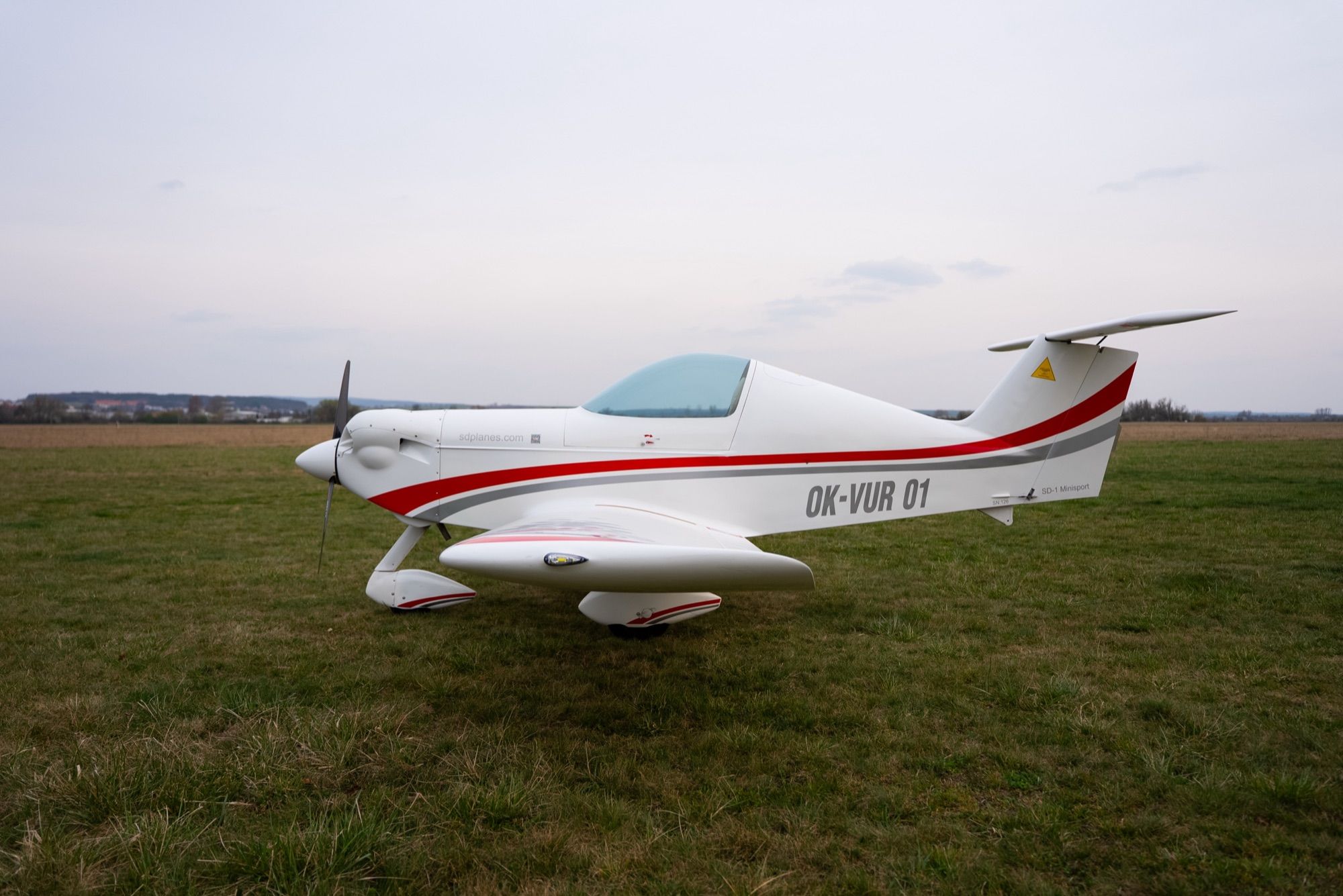
Three ways to put it on the ground.
Conventional Tailwheel
Factory designation: TD
The factory’s lightest, lowest-drag option. Fiberglass main legs and a tailwheel on a composite spring.
Tricycle Gear with Castoring Nose Wheel
Factory designation: TG
A castoring nose wheel. On the ground you steer with differential braking and rudder.
Tricycle Gear with Controllable Nose Wheel
Factory designation: TGC
A nose wheel steered directly from the pedals, with spring suspension. More complex and heavier than the castoring version.
What actually differs.
Source · Spacek undercarriage information, accessed 22 September 2026. "Not stated" means the factory does not list that detail separately for that configuration — not that the part is absent. All three can be fitted with wheel pants.
We are not going to tell you which one is best.
That choice belongs to the pilot who is going to fly it, off the surfaces they actually operate from, with the tailwheel or nose wheel experience they actually have.
What we can do is be straight about the differences. The factory describes the conventional tailwheel as the lightest and lowest-drag option. It describes the controllable nose leg as more complex and heavier than the castoring one. Steering is the other real difference: rudder and tailwheel on the conventional gear, differential braking with the castoring nose wheel, and direct pedal steering with the controllable nose wheel.
We have not published weight figures for each configuration, because we do not have numbers we trust. When we do, they will appear here with their source.
The FAA evaluation is configuration-specific.
The FAA's National Kit Evaluation Team evaluated an SD-1 TGC kit, defined by a Spacek parts list dated January 2, 2016.
That evaluation is tied to the kit it covers. It is not a statement about the conventional tailwheel or the castoring-nose-wheel configuration, and the FAA is explicit that an evaluation is not certification or approval of the kit or the aircraft.
We explain what that means for a builder on the building page.